
Mirza Ghalib

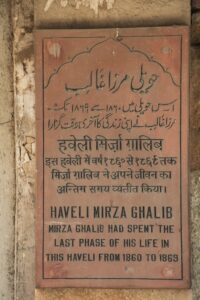
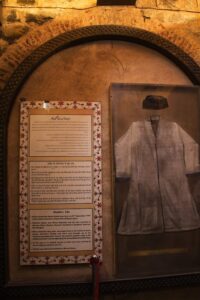
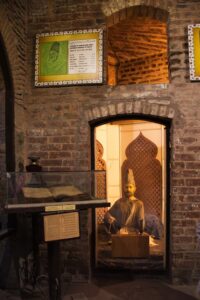
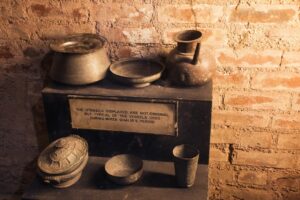
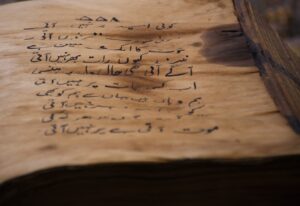
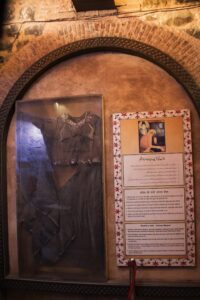
Tucked away in the narrow lanes of Ballimaran in Old Delhi, the Mirza Ghalib Haveli is far more than a restored Mughal-era residence. It is a quiet reminder of a Delhi that prized wit over noise, poetry over propaganda, and shared culture over divided identities. Within these modest walls lived one of the greatest poets the subcontinent has produced – Mirza Ghalib. The man who witnessed the fall of empires, the trauma of 1857, and the transformation of Delhi itself. Today, as visitors walk through its courtyard and gallery, they are not merely entering a building – they are stepping into the mind of a poet whose words continue to echo across centuries. Perhaps that is why every arch, corridor and shaft of light seemed to beckon our young photographer, Sahil Narain, who found himself unable to put his camera down. Each frame he captured feels less like a photograph and more like a quiet conversation with Ghalib himself.
Ghalib’s poetry was never confined by religion or dogma. His famous line, “Hum ko maloom hai jannat ki haqeeqat lekin, dil ke khush rakhne ko ‘Ghalib’ ye khayal achha hai,” gently mocked blind certainty, while “Bas ki dushvaar hai har kaam ka aasaan hona, aadmi ko bhi mayassar nahin insaan hona” remains a timeless reminder that becoming truly human is far more difficult than merely being born one. In an age where political narratives often seek to divide people by faith, caste, or identity, Ghalib’s verses call for something far more enduring – curiosity, compassion, humility, and the courage to question absolutes. His Delhi was one where Urdu, Persian, Hindi, and countless traditions flowed into each other.
Perhaps that is why Ghalib’s Haveli feels especially relevant today for Dilliwalahs. It stands not as a monument to one community, but as a testament to a shared civilizational heritage that belongs equally to everyone who calls Delhi home. The poet who once wrote, “Na tha kuchh to Khuda tha, kuchh na hota to Khuda hota; duboya mujh ko hone ne, na hota main to kya hota,” wrestled with questions of existence that transcended every earthly label.
As the city’s and the country’s politics grow louder, the haveli whispers a gentler truth: Delhi has always been at its finest not when it chose sides, but when it chose culture over conflict, conversation over confrontation, and humanity over hatred. That may well be Mirza Ghalib’s greatest couplet – one he wrote not with ink, but with the life he lived.
Good piece of writing. A gentle reminder to be humane along with being human. More couplets of Galib would have been a treat. Write more such piece.
This blog is a graceful tribute to Ghalib and his Haveli. In just a few strokes, it captures how the space is more than architecture — it’s a living echo of Delhi’s shared heritage. The way you connect his verses to today’s fractured politics makes the piece both timeless and urgent. The closing thought, that Ghalib’s greatest couplet was written with his life, not just his ink, is poignant and memorable- reminding readers that culture, compassion, and curiosity are Delhi’s true legacy.
Wish it was a longer read, was enjoying it so much.
One of your best pieces, Giraj. Loved it. Please write more about Ghalib and his immortal poetry.
Thank you!
Bas ki dushvaar hai har kaam ka aasaan hona, aadmi ko bhi mayassar nahin insaan hona… Good to be reminded.